Arabic version: هجمات تعطل حركة الشحن في مضيق هرمز
More than three weeks after the United States and Iran signed a memorandum of understanding to end their war and restore shipping through the Strait of Hormuz, passage through the vital waterway has again been thrown into uncertainty. US President Donald Trump has said he thinks the truce is “over”, and Tehran has threatened to shut down the strait.
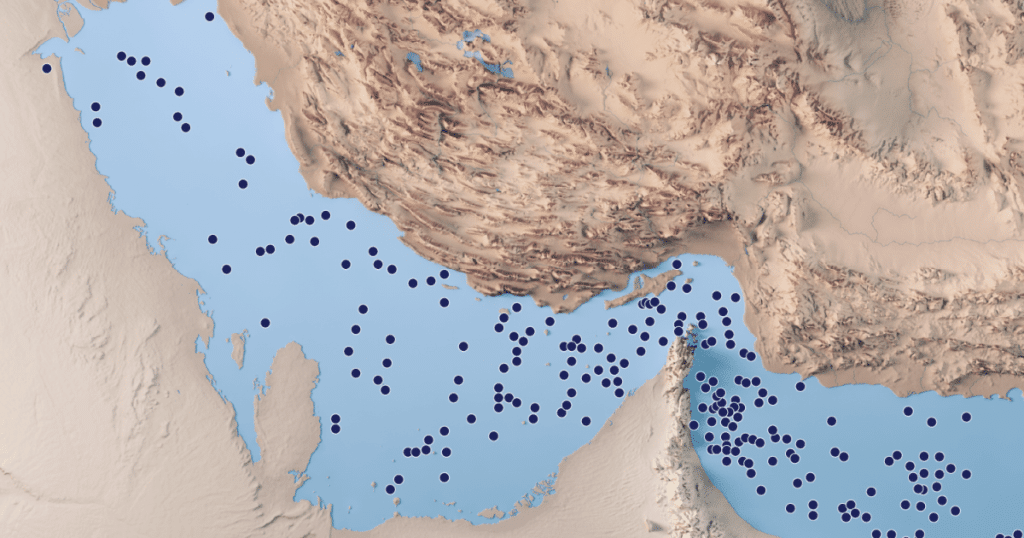
According to Al Jazeera, at least five commercial vessels have been attacked in and around the Strait since the US-Iran ceasefire of June 17. On June 25 the Singapore-flagged container ship Ever Lovely was struck by a projectile about 14km southeast of Oman’s port of Dahit. On June 27 the Panama-flagged tanker Kiku was hit by what US Central Command described as a one-way attack drone while carrying more than 2 million barrels of crude oil; no crew members were injured and no oil leaked. The US blamed Iran and struck cities along Iran’s southern coast on June 26 and June 27, and later struck the capital Tehran; Iran retaliated with strikes on US bases in Bahrain and Kuwait before both sides agreed to hold talks.
On July 6–7 three more vessels were attacked in separate incidents. The Qatari liquefied natural gas tanker Al Rekayyat was struck off the Omani coast, causing an engine-room fire and the evacuation of the crew. The Saudi-flagged supertanker Wedyan, carrying crude oil, was damaged while transiting the strait, and the Liberian-flagged M/T Cyprus Prosperity was also attacked. No casualties were reported in these incidents.
Shipping levels remain well below pre-war norms. Before the conflict, about 100 ships passed through the Strait of Hormuz each day, roughly half of them oil tankers carrying a combined 20 million barrels of crude a day — about one-fifth of global oil consumption. The waterway was effectively closed after US-Israeli bombing began on February 28 and a US naval blockade followed, but it reopened after the June 17 agreement. PortWatch data recorded only 513 ships transiting the strait between June 18 and July 5, an average of 28 ships a day. Since the MoU many ships have switched on their public AIS tracking transponders, but others have not, making complete volume estimates difficult.
Vessels are also changing routes because of mine fears, avoiding the central section of the strait believed to be most mined. Many ships now use two corridors: one through Iranian waters and another through Omani waters under US oversight. Iran’s Islamic Revolutionary Guard Corps has said vessels must use routes designated by Tehran and warned ships failing to comply could face attacks. Tehran says it intends to introduce transit fees once a 60-day transition period ends; the US and many shipping companies maintain Hormuz is an international waterway and transit should remain free, and Trump has said any fees would be “unacceptable”. About 6,000 seafarers remain stranded in the Gulf, according to the International Maritime Organization.