
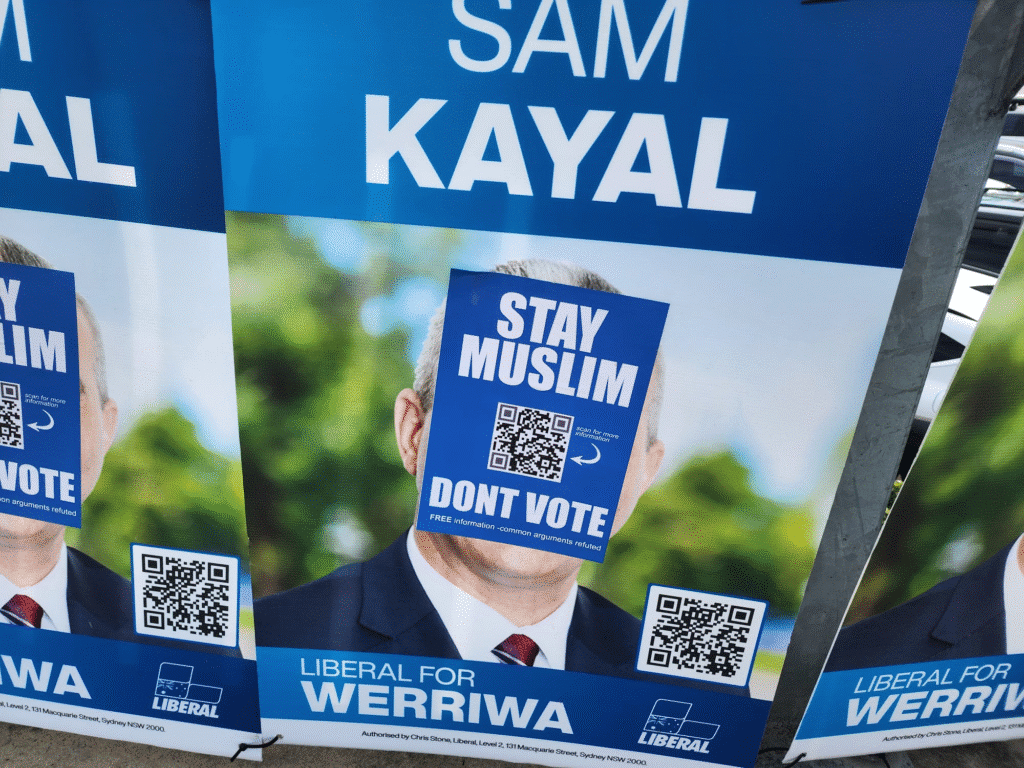






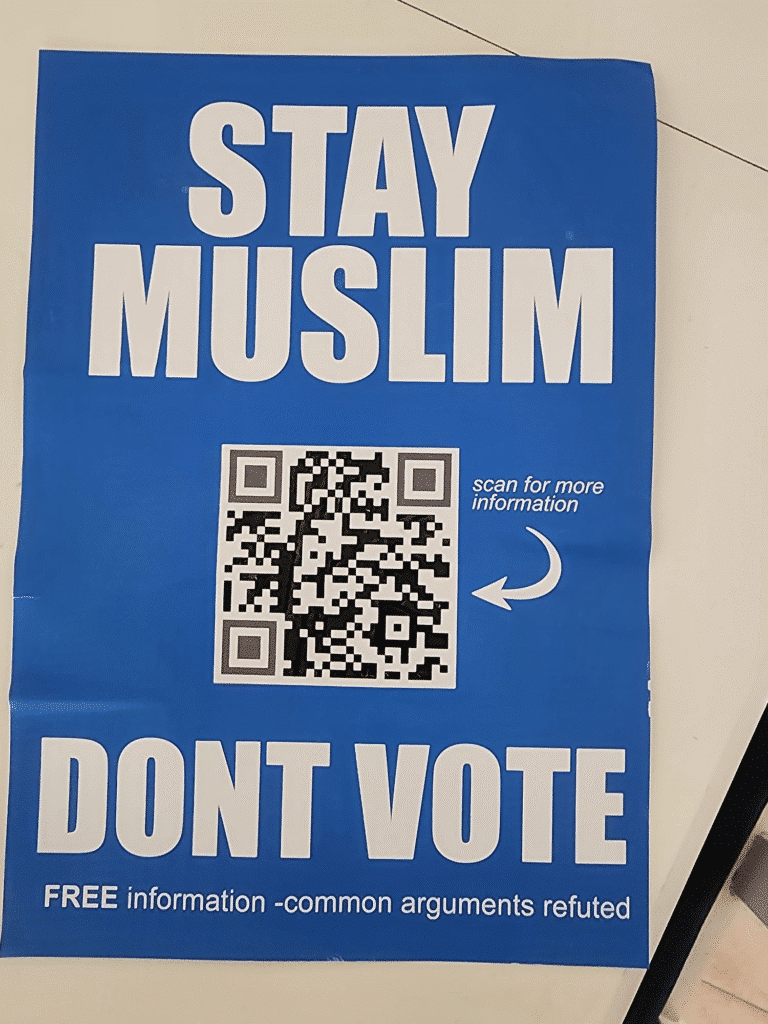
A controversial pamphlet titled “Stay Muslim, Don’t Vote” has surfaced ahead of the 2025 federal election, reigniting debate over political participation among Australia’s Muslim community. The document argues that voting in secular elections contradicts Islamic teachings, framing democratic engagement as an endorsement of man-made laws that may conflict with divine authority. Citing selective religious texts, it calls on Muslims to abstain from voting as an act of religious preservation.
The pamphlet’s message has triggered sharp discussion within Muslim circles, especially in electorates with significant Islamic populations like Werriwa in south-west Sydney. Its presence has raised questions about the role of faith in public life—and how different segments of the Muslim community interpret the intersection of religion and civic duty.
In stark contrast to the pamphlet’s stance, grassroots organisation Muslim Votes Matter has emerged as a vocal proponent of political engagement. The group has launched a strategic campaign to encourage Muslim Australians to cast their vote in support of candidates who reflect their values—particularly on foreign policy issues such as the war in Gaza, religious freedoms, and anti-discrimination measures.
Ghaith Krayem, a spokesperson for Muslim Votes Matter, told The Guardian, “We’re here to hold those who ignore us accountable at the ballot box.” The group is campaigning in 32 electorates and has endorsed Greens candidates in several seats, including Wills and Bruce in Victoria and Moreton in Queensland. In western Sydney, where Labor traditionally performs well, the group has backed independents and is even considering preferencing the Liberal Party in select areas to send a political message.
One such area is Werriwa, a seat with a growing Muslim population and historically safe Labor margins. Here, Liberal candidate Sam Kayal, a local accountant and long-time resident, is campaigning on a platform focused on cost-of-living relief, small business support, and community infrastructure. The entry of Muslim Votes Matter into the electorate adds another layer to the race, challenging the assumption that culturally diverse communities vote monolithically.
However, not all community leaders agree with bloc voting strategies or religiously motivated abstention. Dr. Jamal Rifi, a prominent Muslim figure and long-time advocate for civic integration, has voiced concerns over the framing of a “Muslim vote.” In an interview with ABC Radio National, he said: “I don’t believe in Muslim vote, Christian vote, White Australia vote, or the other votes. We’re all part of the Australian community, and our engagement should reflect that.”
Dr. Rifi’s position underscores a more centrist perspective—one that champions political participation but within the broader framework of national identity and integration. He cautions against the formation of faith-based voting blocs, which he argues could isolate communities rather than empower them.
The diverging views—ranging from total abstention to strategic mobilisation—highlight the complexity and diversity of political thought within Australia’s Muslim population. While the “Stay Muslim, Don’t Vote” message appeals to those who feel disillusioned or conflicted about secular governance, Muslim Votes Matter presents an assertive and pragmatic path to political influence. Dr. Rifi, meanwhile, advocates for civic inclusion without segregated representation.
As the election draws closer, the Muslim vote—however defined—may prove pivotal in electorates like Werriwa. Whether expressed through abstention, alliance-building, or mainstream engagement, it is clear that the political presence of Muslim Australians is becoming increasingly visible. For candidates and parties hoping to connect with these voters, understanding the diversity of opinion within the community will be key—not only to winning elections, but to building lasting trust.
