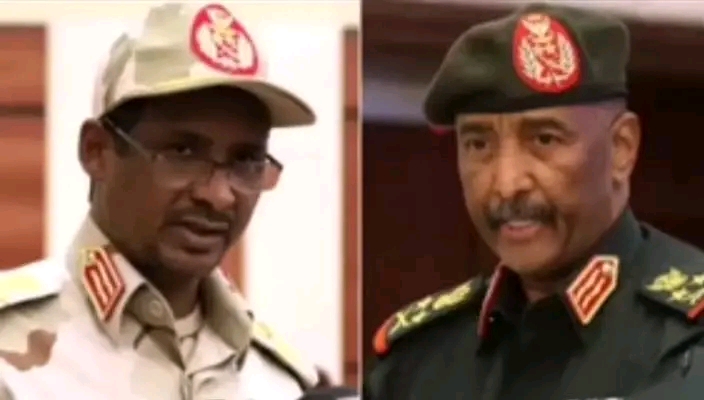
The ongoing conflict in Sudan has obstructed peace talks in Saudi Arabia, making peace the only hope for restoring stability in the largest country in Africa and alleviating tensions.
The resumption of warfare in Khartoum, the country’s oldest capital city, has resulted in significant destruction, particularly at the beautiful state house, which was captured by the Rapid Support Force groups from the Sudanese national army a week ago.
Despite the Sudanese regular army’s insistence on retaking the state house through aggressive actions against the Rapid Support Force-controlled areas in the capital city, the paramilitary groups have maintained their positions, even in the face of threats of aerial bombardment and heavy weaponry.
Last week, the conflicting parties announced their intention to send their respective teams to Saudi Arabia for negotiations, with the support of Saudi leadership and international partners in the pursuit of a peace deal. This move was welcomed by the United States.
Although the leaders appear committed to ending the prolonged military confrontation in the country, the healthcare system has reportedly been decimated, with hospitals running out of essential medicines. The ongoing fighting between rival forces has resulted in a shortage of medicines, exacerbating the crisis.
South Sudan’s President Salva Kiir recently chaired a meeting in Juba to address the security situation across the country’s borders and Sudan’s crisis. The meeting focused on the plight of refugees and returnees stranded at the northern checkpoints, particularly in Malut County, where many South Sudanese who had returned from Sudan wished to go back to their home states. President Kiir emphasized the importance of pursuing diplomatic avenues rather than engaging in warfare, offering advice to his neighboring country.