








Arabic version: لاجئو الصومال يتحملون الصعوبات في حي البساتين باليمن
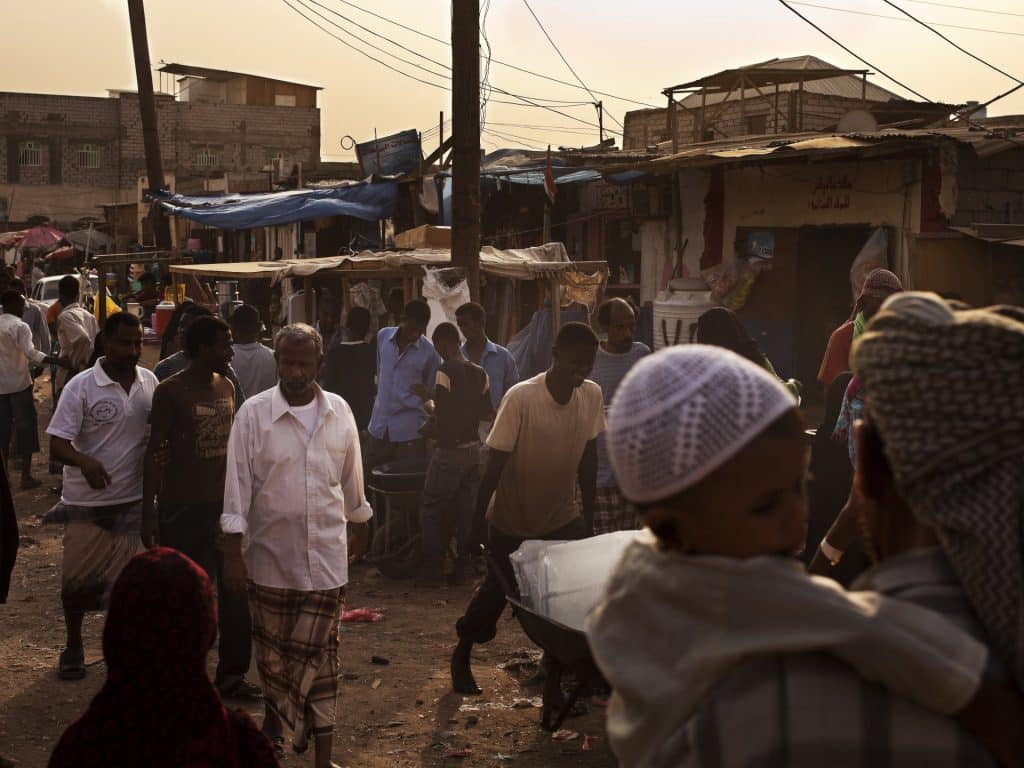
Aden, Yemen – Lying on the outskirts of Yemen’s interim capital, Aden, al-Basateen district reveals a decades-old refugee story, where Arabic blends with Somali and the faces harbor memories of a different place across the sea. Residents refer to the area as “Yemen’s Mogadishu” or “the Somalis’ neighborhood,” reflecting the demographic shift since the 1990s, when civil war in Somalia pushed thousands to seek safety across the Gulf of Aden. According to Al Jazeera, the district now hosts more than 40,000 residents, primarily of Somali origin, living under harsh conditions marked by economic vulnerability and unresolved legal status.
Many residents gather at the entrances of main streets each day, hoping for employment in construction or manual labor. This precarious cycle of work is crucial for survival, as extreme poverty deepens and humanitarian aid dwindles. Ashour Hassan, a local resident, shared his daily struggle, earning between 3,000 and 4,000 Yemeni rials a day (less than $3), which barely meets his family’s basic needs. Families in al-Basateen often rely on both men and women to contribute financially, with women undertaking various jobs, including cleaning and running small businesses.
Poverty is evident in al-Basateen’s overcrowded homes, often made of metal sheets and lacking basic services. A pervasive sense of “suspended belonging” affects the Somali residents, many of whom carry memories of their homeland while the younger generations know only life in Aden. Fatima Jame, born in Aden to Somali parents, expressed the frustration of being labeled a refugee despite having lived in Yemen her entire life.
The situation has worsened since the onset of Yemen’s civil war in 2014, which has exacerbated the struggles of both host communities and refugees. The United Nations Office for the Coordination of Humanitarian Affairs reported that funding for support programs in Yemen met only 25 percent of the country’s actual needs in 2025. Many residents in al-Basateen have seen a significant decline in aid, leading some families to consider returning to Somalia, despite the risks.
Despite the bleak outlook, a few individuals have improved their conditions through education or small business ventures. However, the majority continue to face challenges, with Yemen being the poorest country in the Arabian Peninsula. As of July 2025, Yemen hosted more than 61,000 asylum seekers and refugees, primarily from Somalia and Ethiopia. Recent arrivals like Hussein Adel, who fled death and hunger, find themselves confronting a harsh reality in al-Basateen, struggling for basic necessities and stability in a community marked by trauma and uncertainty.


