








Arabic version: علماء يلتقطون لقطات نادرة لحوت العنبر أثناء الولادة
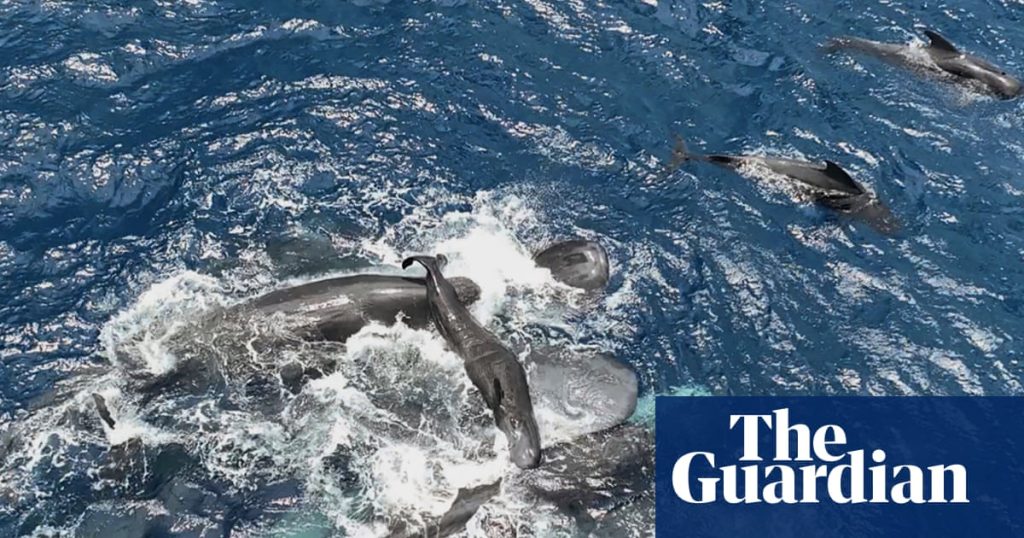
A team of scientists has successfully filmed a sperm whale giving birth while being assisted by other female whales. This extraordinary event took place off the coast of the Caribbean island of Dominica on 8 July 2023, involving a 19-year-old female whale named Rounder and her pod of 11 whales.
According to The Guardian, the birth lasted 34 minutes, beginning when Rounder’s tail emerged from the water. The researchers observed the behavior of the pod over nearly five and a half hours, utilizing drones and underwater sound recordings to document the event.
This birth marks a significant milestone in whale research, as only nine out of 93 cetacean species have been observed giving birth in the wild. Notably, the support provided by unrelated female whales during the birthing process is a rare phenomenon. Shane Gero, a member of the Project Ceti team, noted that this is the first evidence of birth assistance in non-primates.
During labor, other adult females were seen diving under Rounder’s dorsal fin, providing crucial support to the mother and her newborn calf. Following the birth, the pod exhibited a rapid change in behavior, actively engaging with the newborn by touching and maneuvering it in the water. This behavior is believed to be rooted in the evolutionary history of cetaceans, as whale calves are born tail-first and require assistance to avoid sinking and to take their first breaths.
The researchers also recorded significant changes in the whales’ vocalizations during the birth event, suggesting a coordinated effort to support Rounder and her calf. Sperm whales have one of the longest gestation periods among mammals, lasting up to 16 months, and the calves grow quickly, relying on their mother’s milk for at least two years. The successful birth and subsequent sighting of the calf with other young pod members indicate a positive outlook for its survival into adulthood.


