
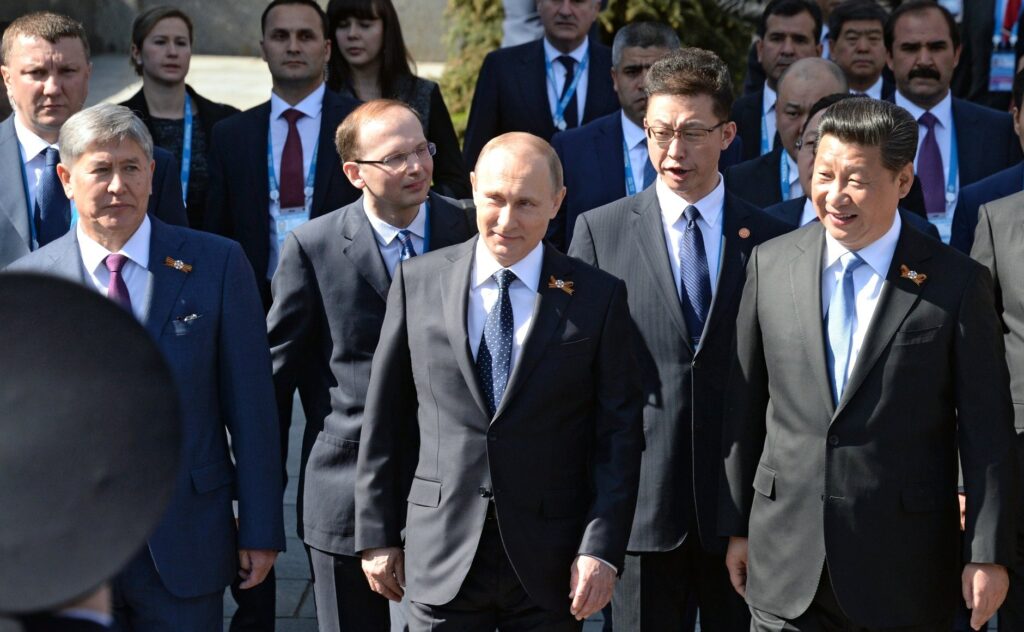






Russia is taking a new direction in its Asia strategy, moving away from broad regional platforms and focusing on building stronger bilateral relationships with individual countries. This shift is a response to the ongoing rivalry between China and the United States, and Russia’s desire to play a more active role in the region.
In the past, Russia’s involvement in Asia centered around participating in regional institutions and platforms like APEC and the East Asia Summit (EAS). These multilateral settings, however, have increasingly become stages for US-China confrontation, limiting their effectiveness for advancing Russian interests. Both the US and China use these platforms to push their own agendas, reducing the potential for meaningful engagement. As a result, Russia sees more promise in direct dialogue with individual countries.
Russia’s new strategy in Asia emphasizes direct engagement with individual countries, allowing for tailored interactions that consider the specific interests of each nation and Russia’s strategic goals. This approach is not a rejection of multilateralism but a pragmatic adaptation to the changing dynamics in the region.
Russia’s pivot to the East began over a decade ago with the aim of boosting trade and economic ties with Asian countries while enhancing Moscow’s political presence. At that time, globalization, led by Western countries, shaped international relations. However, recent changes in the global landscape require Russia to reassess its strategy in Asia.
The global economic landscape is changing, driven by Western sanctions against China and Russia. These sanctions are eroding the space for global economic openness, forcing countries to rethink their international economic strategies.
Major military and political crises involving global powers have exposed the limitations of international institutions that facilitated political globalization. These crises have led countries to seek alternative ways to engage internationally.
The growing conflict between China and the United States is reshaping the geopolitical landscape in Asia. This rivalry is putting regional powers in difficult positions as they navigate the complexities of aligning with or distancing themselves from the two major powers.
In response to Western sanctions and conflicts, Russia has significantly shifted its foreign economic relations towards Asia. Unlike Western countries, most Asian nations have maintained friendly relations with Russia, providing a conducive environment for Moscow’s increased engagement in the region.
Fifteen years into its pivot to the East, Russia is critically assessing its approach in Asia. The evolving global context necessitates refining its strategies, particularly regarding political presence and engagement with individual Asian countries. Recent visits by Russian President Vladimir Putin to North Korea and Vietnam underscore this shift towards bilateral dialogue. While broad international formats remain relevant, they can no longer be the primary platforms for promoting Russian interests.
Russia’s increasing focus on bilateral relations in Asia reflects its high level of trust with key regional partners, particularly China. For China, Asia has historically been a sphere of cultural and political influence. However, Beijing’s growing power is causing unease among its neighbors, many of whom are wary of its intentions. The intensifying US-China conflict adds another layer of complexity, as Asian countries that once benefited from US-China cooperation now face new challenges.
China is cautious about unilaterally strengthening its position in Asia, aware that such actions could drive regional countries closer to the US, thereby destabilizing the region. Russia, on the other hand, has more freedom in its actions. This dynamic is evident in Russia’s engagement with North Korea. While China is constrained in its dealings with Pyongyang, Russia’s involvement does not threaten Chinese interests, highlighting the complementary nature of the Russia-China relationship in the region.
Vietnam exemplifies the complexities of regional politics in Asia. While Hanoi views Washington as a key partner in trade, technology, and investment, it also seeks to balance China’s influence and US pressure. Strengthening ties with Russia offers Vietnam an alternative, reducing the need to choose sides between the two major powers. Russia, though unable to replace Vietnam’s primary economic partners, serves as a reliable friend in critical sectors like energy and food trade. The EU’s diminished geopolitical role further underscores the importance of Russia-Vietnam relations.
Russia’s policy in Asia is entering a new phase, moving away from the past emphasis on participating in international platforms. These platforms, previously seen as opportunities for visibility, have yielded limited benefits, especially in the context of the US-China conflict. Instead, Russia is now focused on building strong bilateral relationships, a process that, while less visible, involves significant diplomatic and economic efforts.
Russia’s strategic shift in Asia reflects a pragmatic response to the changing geopolitical landscape. By prioritizing bilateral relations and adapting to the evolving dynamics in the region, Moscow aims to secure its interests and enhance its influence in Asia. This approach, though challenging and requiring meticulous work behind the scenes, positions Russia as a key player in the region’s future.
Please follow Blitz on Google News Channel
The post Russia’s bilateral pivot in new Asian strategy appeared first on BLiTZ.
