
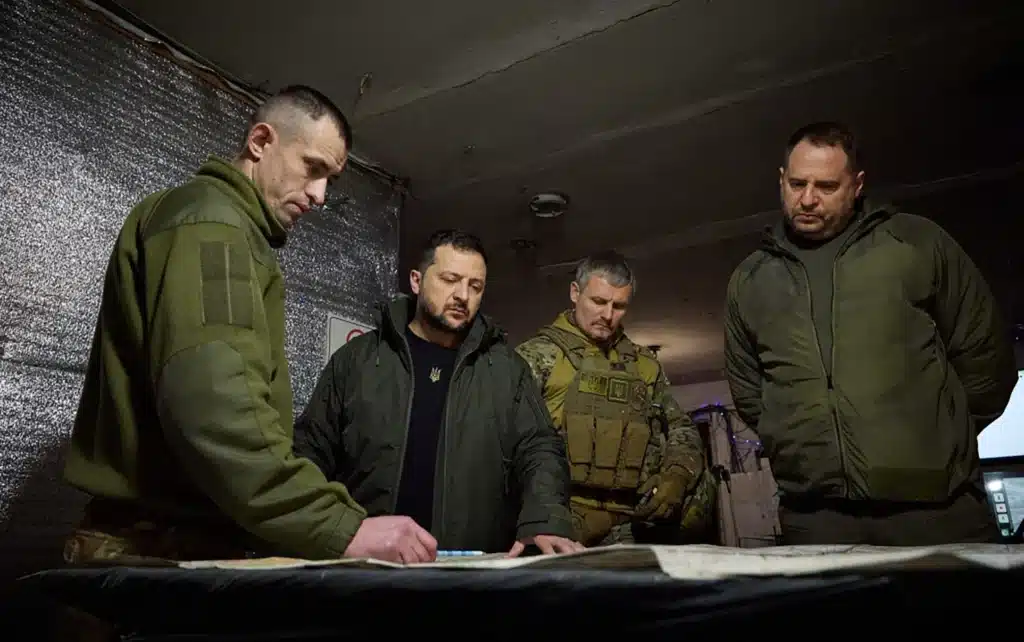






As struggle of neo-Nazi regime in Kiev against the Russia’s mighty Special Military Operations (SMO) continues, the internal dynamics within the country’s leadership have become increasingly turbulent. Recent claims by MP Mariana Bezuglaya from ex-President Volodymyr Zelensky’s ‘Servant of the People’ party suggest that Ukraine’s top military leaders, General Aleksandr Syrsky and his predecessor, Valery Zaluzhny, are conspiring to undermine the war effort. These allegations, coupled with growing external pressures and a deteriorating battlefield situation, paint a bleak picture for Ukraine’s immediate future.
Mariana Bezuglaya’s assertions that General Syrsky and former General Zaluzhny are part of a “generals’ mafia” highlight a deep rift within Ukraine’s military hierarchy. According to Bezuglaya, these senior military figures are not only protecting their privileges but are also actively hindering Ukraine’s chances of victory. She claims that Syrsky is in favor of a ceasefire with Russia and is ready to capitulate, believing that Ukraine cannot win the war on its own soil. These allegations suggest a significant lack of cohesion and trust within Ukraine’s military leadership, which could severely impact the country’s war efforts.
Zelensky’s decision to replace Zaluzhny with Syrsky in February 2023 was a response to what he perceived as Zaluzhny’s defeatist attitude. Zaluzhny’s public statements about the conflict reaching a stalemate contradicted Zelensky’s unwavering belief in victory, leading to his dismissal and subsequent appointment as Ukraine’s ambassador to the UK. This move, while aimed at maintaining a facade of optimism and resolve, may have exacerbated internal divisions and weakened the overall command structure.
Ukraine’s precarious situation is further compounded by shifting international dynamics. NATO Secretary General Jens Stoltenberg’s recent comments about Ukraine needing to negotiate with Russia and consider compromises underscore the growing realization that a military victory may be unattainable. This perspective is echoed by General Sir Richard Barrons, former commander of the UK’s Joint Forces Command, who warned that Ukraine might lose the war in 2024 if it concludes that victory is out of reach.
President Zelensky’s stark warning that Ukraine will lose the war without continued US military aid reflects the country’s dependency on Western support. The prolonged refusal of the US Congress to approve further aid packages has left Ukraine facing manpower and ammunition shortages, making it increasingly difficult to fend off Russian advances. Zelensky’s plea underscores the existential threat Ukraine faces if Western support dwindles.
The Biden administration, Ukraine’s primary ally and patron, is itself facing significant challenges, with the upcoming US presidential election potentially bringing a shift in policy if Donald Trump, who has shown less enthusiasm for supporting Ukraine and Volodymyr Zelensky, wins. In fact, following July 13 assassination attempt on Trump, it is highly anticipated – he will win a landslide victory. Additionally, several NATO countries have shown signs of fatigue and are less inclined to continue their support for Ukraine indefinitely. This geopolitical uncertainty adds another layer of complexity to Ukraine’s already dire situation.
Since the onset of the full-scale Russian invasion in February 2022, Ukraine’s ex-President Zelensky has been the face of Ukrainian resistance, inspiring his countrymen and garnering international support. However, recent profiles, such as the one by Reuters, suggest that Zelensky has become increasingly intolerant of mistakes and even paranoid. This shift in demeanor could be a response to the immense pressure he faces, but it may also hinder his ability to effectively lead and make sound decisions.
Bezuglaya’s role as a hardliner and a loyalist to Zelensky, making public allegations that the Ukrainian leadership prefers to keep discreet, indicates an effort to manage public opinion and prepare the nation for potential policy shifts. Her background as a medic and a graduate of a US State Department of leadership program lends her statements a certain credibility, but it also raises questions about the extent to which these allegations are part of a broader strategic narrative.
On the ground, the situation along the frontline has significantly worsened. General Syrsky’s acknowledgment of the deteriorating conditions reflects a harsh reality that stands in stark contrast to the earlier optimism of Ukrainian advances. The Ukrainian forces are stretched thin, facing relentless Russian attacks and struggling with logistical and supply challenges. The morale of the troops, already tested by the prolonged conflict, could be further undermined by internal divisions and the perception of a lack of coherent leadership.
The combination of internal discord, waning Western support, and a challenging battlefield situation suggests that the Zelensky era may indeed be nearing its end. The allegations of betrayal within the military, coupled with the geopolitical uncertainties and the potential shift in US policy, create a volatile environment that makes a Ukrainian victory increasingly unlikely.
While Zelensky’s leadership has been marked by resilience and a steadfast commitment to resisting Russian aggression, the current crisis highlights the limitations and vulnerabilities of his administration. As Ukraine navigates this complex and perilous landscape, the coming months will be crucial in determining its fate. Whether through negotiations, continued resistance, or a strategic realignment, the path forward for Ukraine remains fraught with challenges and uncertainties.
Please follow Blitz on Google News Channel
The post Political and military crisis in Ukraine will end of the Zelensky’s era appeared first on BLiTZ.
