


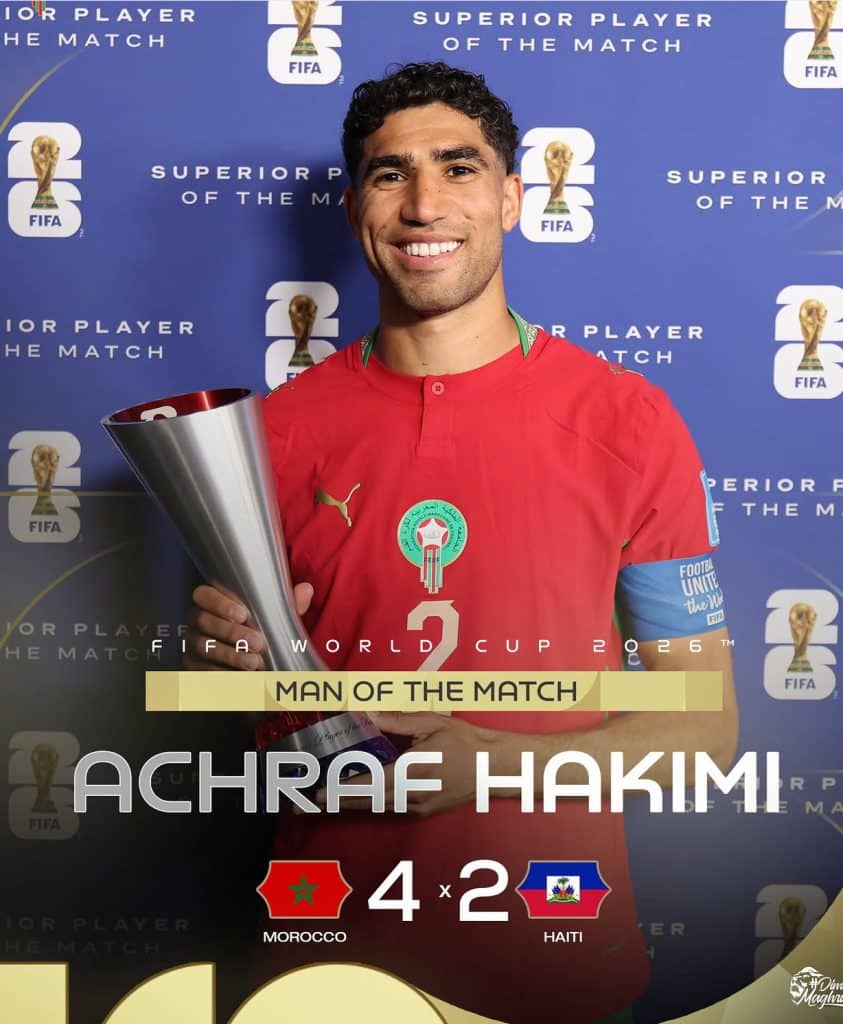
The Moroccan national team triumphed over Haiti with a score of four to two. At first glance, this result might seem like a reaffirmation of the team’s strength in this World Cup edition. However, reducing a full ninety minutes to just the scoreline would be a superficial interpretation of a match that conveyed much deeper messages than the four goals suggest.
From the opening minutes, the scene unfolded differently than many had anticipated. Haiti entered the match with a mindset of having nothing to lose, surprising the Moroccan defense with an early goal that disrupted their plans and created a sense of shock in the game. This goal was not merely a fleeting lead; it served as a stark reminder that football does not honor history, nor does it favor those who achieved greatness in the past.
In major tournaments, reputation means little; only focus matters.
Morocco responded quickly through Achraf Hakimi, a player who has embodied the spirit of this national team in recent years. The equalizer was significant not just for restoring balance, but also for quelling doubts early on and allowing Morocco to regain its natural rhythm. The message was clear: this team has learned how to recover swiftly from setbacks.
Next, it was Abdellah Sabiri’s turn to shine, as he continues to establish himself as one of the most decisive players in the tournament. His second goal was more than just a statistic; it reinforced the narrative of a player who proves, match after match, that a true goal-scorer is not just someone who finds the net frequently but knows the right moment to make their mark.
Perhaps the most admirable aspect of Haiti’s performance in this match was its refusal to succumb to the role of the underdog. Their return with a second goal not only complicated the scoreline but also placed Morocco under a psychological test rather than just a tactical one.
This is precisely where the value of this match lies.
Teams that aspire to win the cup aren’t only tested against the giants; they are also challenged in their ability to handle matches that everyone assumes are already decided. For when confidence crosses its natural boundaries, it becomes the most formidable opponent any contender can face.

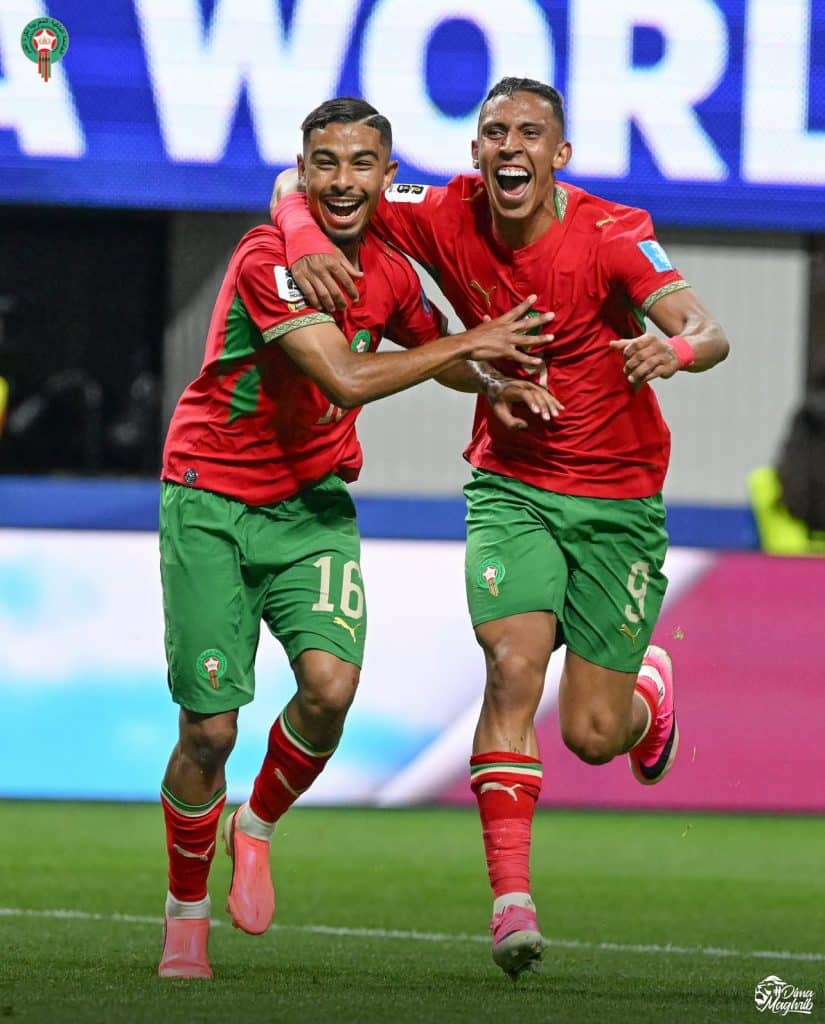
In the second half, Sofiane Rahimi emerged at the moment fans were eagerly waiting for. His third goal calmed the stands, restoring a feeling that the crowd had momentarily lost. It was a moment where it seemed as if the national team was reclaiming its true identity—the one that Moroccans recognize well when their collective rhythm starts to assert itself once again.
Then came the fourth goal, which carried a completely different symbolism from the others. A player in his twenties, making his World Cup debut and scoring his first goal on this global stage. This moment may seem ordinary to some, but it vividly illustrates the vision being built within Moroccan football today.
Morocco is no longer a team that thrives on a moment of achievement or an exceptional generation.
Morocco has begun to establish continuity.
A generation is passing the ambition to the next, and a football culture is gradually shifting from merely dreaming of honorable qualification to a mentality that believes its rightful place is among those competing for the title.
Indeed, Morocco won and secured three more points.
However, the true gain from this match was not the four goals or even the assurance of progressing with greater confidence.
The real achievement is that the team experienced a minor jolt at the perfect moment—a reminder of a truth champions always know:
The road to the cup requires more than just talent.
It demands respect for every match, as if history begins anew with the referee’s whistle.