

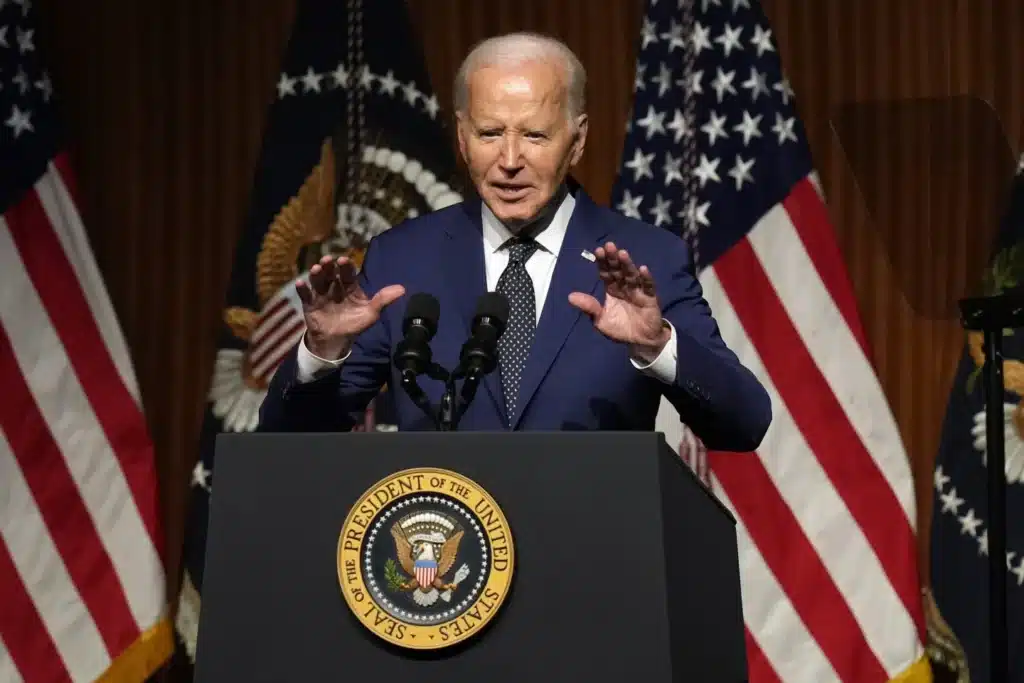







In a significant political move, President Joe Biden has unveiled a set of comprehensive reforms aimed at reshaping the US Supreme Court and eliminating presidential immunity. These proposals, which include a constitutional amendment to strip former presidents of immunity, term limits for Supreme Court justices, and a binding code of conduct for the high court, are designed to restore trust in the American judicial system and ensure greater accountability at the highest levels of government.
At the center of Biden’s reform agenda is the “No One Is Above the Law Amendment,” which seeks to abolish the long-standing immunity from prosecution that former presidents currently enjoy. Biden’s push for this amendment follows a contentious Supreme Court decision in July that granted broad immunity to presidents for crimes committed while in office. This ruling came after federal prosecutors attempted to charge former President Donald Trump with four criminal counts related to the 2020 presidential election, accusing him of conspiring to overturn its results and obstructing its certification.
Biden argues that the Supreme Court’s decision undermines the fundamental principles of justice and accountability. “The US president’s power should be limited, not absolute,” Biden stated in an op-ed published by the Washington Post. He emphasized that without this amendment, the only constraints on presidential behavior would be self-imposed, creating a dangerous precedent for unchecked executive power.
Another cornerstone of Biden’s reform package is the introduction of term limits for Supreme Court justices. Currently, justices serve lifetime appointments, a practice that Biden believes contributes to an overly politicized and entrenched judiciary. He proposes limiting justices to 18 years of active service, with new appointments made every two years. This change aims to ensure a steady infusion of new perspectives and reduce the influence of long-standing partisan biases on the court’s decisions.
“Lifetime seats for the high court are an anachronism,” Biden wrote, advocating for a more dynamic and responsive judicial system. By implementing term limits, Biden hopes to create a judiciary that better reflects the evolving values and needs of American society.
Biden also calls for the establishment of a binding code of conduct for Supreme Court justices, replacing the current voluntary ethics code, which he criticized as “weak and self-enforced.” Under Biden’s proposal, justices would be required to disclose gifts, refrain from public political activity, and recues themselves from cases where they or their spouses have financial or other conflicts of interest. These measures are intended to eliminate any appearance of bias or corruption and ensure that justices uphold the highest ethical standards.
“A binding code of conduct is common sense,” Biden wrote, stressing the importance of transparency and accountability in maintaining public trust in the judiciary.
Joe Biden’s proposals have received substantial support from the public and legal scholars across the political spectrum. “The majority of Americans, as well as conservative and liberal scholars, support these changes,” Biden claimed, highlighting the broad consensus on the need for judicial reform. He argued that these measures are necessary to prevent the abuse of presidential power and “strengthen the guardrails of democracy.”
Vice President Kamala Harris has also endorsed the reforms, emphasizing the importance of accountability and transparency at the highest levels of government. “We must ensure that no one, not even the president, is above the law,” Harris stated, echoing Biden’s call for a more accountable and ethical government.
However, Biden’s proposals face significant resistance from Republican lawmakers, who hold a majority in the House of Representatives. GOP leaders have dismissed the plan as “dead on arrival,” arguing that it represents an overreach of executive power and a direct attack on the conservative-leaning Supreme Court.
Former President Donald Trump has also been vocal in his opposition, labeling Biden’s effort as “a typical Biden con.” In an interview with Fox News, Trump dismissed the proposal as “going nowhere” and accused Biden of using it as a political stunt. “He knows that too,” Trump added, expressing confidence that the reforms would not gain traction.
The debate over Biden’s proposed Supreme Court reforms is likely to dominate the political landscape in the coming months. If enacted, these changes would mark a profound shift in the balance of power between the executive and judicial branches of government. The abolition of presidential immunity, in particular, would have far-reaching implications, potentially exposing former presidents to criminal prosecution for actions taken while in office.
The introduction of term limits for justices and a binding code of conduct would also transform the judiciary, making it more accountable and less susceptible to partisan influence. These reforms could help restore public trust in the Supreme Court, which has been eroded by perceptions of bias and ethical lapses.
President Joe Biden’s call for Supreme Court and presidential reform represents a bold and ambitious effort to reshape the American judicial system. By proposing to abolish presidential immunity, introduce term limits for justices, and establish a binding code of conduct, Biden aims to restore accountability, integrity, and public trust in the nation’s highest court. While facing significant opposition from Republican lawmakers and former President Donald Trump, the proposed changes reflect a growing demand for judicial reform among the American public and legal scholars. As the debate unfolds, the future of the Supreme Court and the balance of power in the US government hang in the balance.
Please follow Blitz on Google News Channel
The post Biden’s push for Supreme Court and presidential reform sparks controversy appeared first on BLiTZ.


