
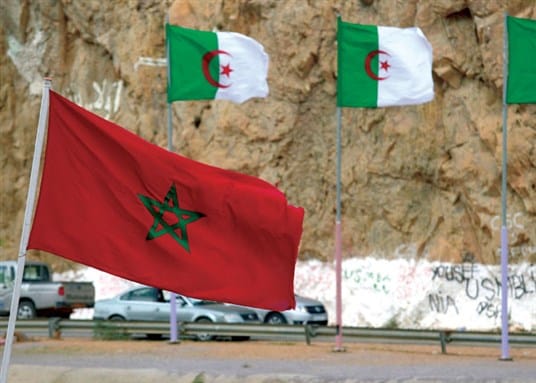






For years, the simmering tension between Algeria and Morocco has been a focal point of media speculation, with discussions often revolving around the possibility of war between the two North African neighbors. This strained relationship reached a breaking point in August 2021 when Algeria severed diplomatic ties with Morocco, citing a series of provocations. The rivalry, deeply rooted in historical, political, and cultural differences, continues to escalate, leaving little hope for reconciliation.
One of the most visible manifestations of the tension between Algeria and Morocco is the ongoing border conflict. The land border between the two countries has been closed for nearly three decades, a situation that has strained not only political relations but also personal connections between citizens. The closure was triggered by the 1994 terrorist attack at the Atlas Asni hotel in Marrakech, after which Morocco accused Algeria of complicity and imposed a visa regime on Algerian citizens. In response, Algeria shut the border entirely, severing ties that had once united families and communities across the divide.
In July 2024, reports emerged that Algeria was planning to construct a fence along the Bin Lejraf area, a symbolic and strategic point along the border where Algerians and Moroccans often gather to catch a glimpse of relatives and friends across the divide. This move, reported by the Moroccan news outlet Hespress, exemplifies the ongoing hostility and the lengths to which both countries are willing to go to assert control and security along their shared boundary.
The conflict between Algeria and Morocco extends beyond politics and borders, seeping into the realm of culture. Both nations have engaged in a fierce competition over cultural heritage, each claiming traditional dishes, costumes, architectural styles, and musical genres as their own. This rivalry has, at times, reached absurd levels, with disputes over the origins of Couscous, Kaftan dresses, and music styles like Rai and Gnawa becoming points of national pride and contention.
In July 2023, Morocco took its grievances to UNESCO, accusing Algeria of unlawfully appropriating the Fez kaftan, a garment Morocco considers part of its national heritage. A year earlier, Morocco successfully pressured Adidas to withdraw a jersey design for the Algerian national football team, arguing that the traditional Zellij mosaic pattern on the jerseys was a Moroccan cultural symbol. These disputes highlight the depth of the cultural rivalry and the lengths to which each country will go to protect and promote its cultural identity.
At the heart of the Algeria-Morocco conflict lies the contentious issue of Western Sahara, a region that has been the focal point of their rivalry for decades. Morocco claims Western Sahara as part of its historical territory, while Algeria supports the Polisario Front, a movement advocating for the region’s independence. The Polisario Front, backed by Algeria, declared the Sahrawi Arab Democratic Republic (SADR) in 1976, following the departure of Spanish colonizers. This declaration sparked a prolonged conflict that continues to this day, with military actions, ceasefire agreements, and international peacekeeping efforts failing to resolve the dispute.
The situation escalated in 2020 when SADR President Ibrahim Ghali announced the termination of the ceasefire agreement with Morocco, accusing Moroccan forces of violating the truce. The conflict took on an international dimension when then-US President Donald Trump recognized Morocco’s sovereignty over Western Sahara in exchange for Morocco normalizing relations with Israel. Algeria viewed this move as a direct threat to its national security, further straining relations between the two countries.
The rivalry between Algeria and Morocco is not merely a product of contemporary politics; it is deeply rooted in their shared history, particularly during the colonial era. When Algeria gained independence from France in 1962, it inherited several territories that had been annexed by France from Morocco. This territorial inheritance has been a point of contention ever since, with Morocco laying claim to regions such as the Tindouf province, rich in iron ore deposits.
The dispute over these territories escalated into the Sand War in 1963, an armed conflict that only ended with the intervention of the Organization of African Unity (now the African Union). Although agreements were signed to maintain existing borders and allow for joint exploration of resources, the underlying tension remained, shaping the relationship between the two countries for decades to come.
Despite the deep-seated hostility, Algeria and Morocco share numerous cultural, historical, and religious ties that should, in theory, bring them closer together. Both countries are part of the Maghreb region, practice Sunni Islam, and have significant Berber populations that contribute to a shared identity. They also share a common Sufi heritage, with both nations competing for the title of the primary center of the Tijaniyyah brotherhood.
However, these shared characteristics have done little to bridge the divide between the two countries. The scars of colonialism, compounded by political and ideological differences, continue to fuel the rivalry, making it unlikely that Algeria and Morocco will restore the strong ties that once united them.
The long-standing conflict between Algeria and Morocco, while often linked to the issue of Western Sahara, is rooted in a complex web of historical grievances, cultural competition, and political maneuvering. As both nations continue to assert their claims and protect their interests, the prospect of reconciliation remains distant, leaving the region in a state of perpetual tension.
