
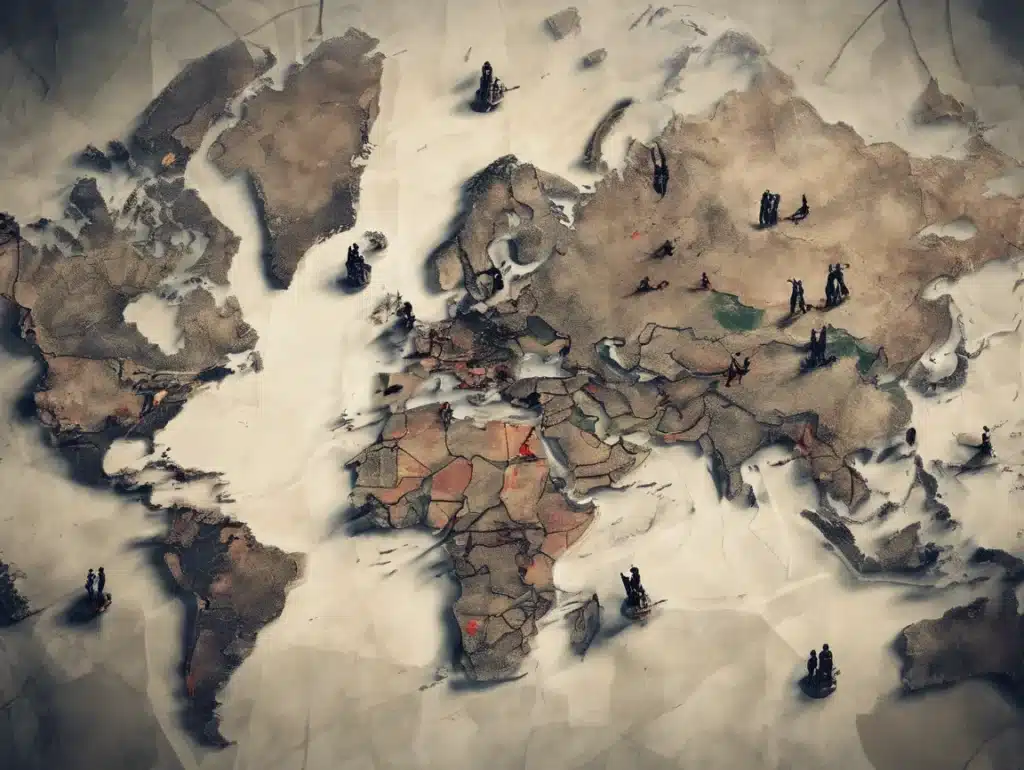






In over two decades since the tragic events of September 11, 2001, the world has experienced a dramatic shift in global politics, military interventions, and the rise of terrorism. What was initially promised as a war to eradicate terrorism and restore peace has instead manifested in a world that remains entangled in a web of violence, war, and insecurity, particularly in regions like the Middle East, Afghanistan, and Pakistan. Rather than diminishing, terrorism and global unrest have continued to escalate, raising difficult questions about the efficacy of global powers and their actions in this period.
The Aftermath of 9/11, Unfulfilled Promises: Following the 9/11 attacks, then-President George W. Bush and his allies assured the global community that terrorism, represented by Osama bin Laden and his Al-Qaeda network, would be eradicated. They promised a world free from the grip of terrorism, where peace and security would reign. The “War on Terror” was launched with the intent to eliminate extremist organizations and their followers, bringing an end to the radical ideologies that threatened global stability.
However, over 2 decades later, the reality has proven to be starkly different. Osama bin Laden may be dead, but his ideology and the network he cultivated remain alive and potent. Al-Qaeda, the Taliban, and other extremist groups continue to thrive, expanding their influence and operations across regions, from Afghanistan, Pakistan to the Middle East. The very forces the US set out to dismantle are not only surviving but, in some instances, stronger than ever.
For instance, Mullah Omar’s Taliban, though temporarily weakened, has regained control in Afghanistan, marking a significant failure in US foreign policy. Despite immense military, economic, and human resources being poured into Afghanistan, the country now finds itself back in the hands of the same extremist group the US aimed to neutralize. Similarly, areas in Pakistan also grapple with the persistent presence of terrorist cells.
Iraq and the Legacy of War: The invasion of Iraq in 2003 was justified under the pretext of eliminating Saddam Hussein, who was accused of possessing weapons of mass destruction (WMDs) and supporting terrorism. Although Saddam was overthrown and eventually executed, the aftershocks of the Iraq war continue to reverberate. Iraq, far from becoming a beacon of peace, remains a fragmented state, plagued by sectarian violence, insurgencies, and the presence of groups like ISIS.
The cost of the Iraq war is staggering. More than 600,000 people lost their lives, with countless others displaced or injured. The United States, too, paid a heavy price, losing over 3,000 military personnel, while more than 20,000 soldiers returned home fatally injured. Despite these sacrifices, terrorism in the region is far from eradicated. Instead, the chaos left in the wake of Saddam’s ousting has fuelled extremist ideologies and given rise to more sophisticated terrorist networks.
The Unending Conflict in the Middle East: The violence in the Middle East has also intensified over the past two decades. The Israeli-Palestinian conflict continues to claim innocent lives, with the most vulnerable—children and women—often paying the highest price. The recent clashes between Israel and Lebanon, like the ongoing Gaza conflict, are reminders that peace in the region remains elusive.
In these conflict zones, promises of stability and security have gone unfulfilled. Civilians continue to bear the brunt of violence, while regional instability fosters resentment and fuels extremism. What was once a war on terrorism has, for many, become a war that perpetuates terrorism, leaving nations and people divided and disillusioned.
The Russia-Ukraine War, Another Global Flashpoint: Beyond the Middle East, new conflicts are arising, further complicating the global geopolitical landscape. The war between Russia and Ukraine is a stark example of this. What began as a regional conflict has now escalated into a war with global repercussions, threatening peace in Europe and beyond. Cities have been destroyed, infrastructure obliterated, and thousands of lives lost, as global superpowers jockey for influence.
This ongoing conflict, along with the looming threat of tensions between the US and China, raises concerns that the world could be heading toward another catastrophic world war. The possibility of a global conflict, fuelled by superpowers with conflicting interests, underscores the fragility of peace in today’s world.
A Cycle of Violence and Power: A troubling reality of the post-9/11 world is that history seems to be repeating itself. During the Cold War, the United States supported insurgents and jihadists, particularly in Afghanistan, to fight Soviet forces. Today, those same forces—or their ideological successors—are fighting against the US and its allies in the name of jihad, rallying against what they perceive as foreign oppression.
In regions where conflict persists, terrorism is not merely a product of extremist ideologies; it is often a reaction to foreign intervention. As long as foreign powers attempt to impose their will through violence, there will always be a corresponding force that resists. It is a cycle that perpetuates itself, each act of violence breeding further resentment and extremism.
The Way Forward, Reevaluating Global Policies: The world is at a critical juncture. It is imperative for nations like the United States, the UK, Australia, and others to critically assess the impact of their foreign policies. Have they succeeded in creating a more peaceful world, or are they contributing to its destruction?
The reality is that terrorism, in all its forms, is indeed a threat that must be addressed. But violence cannot be met with violence, and terrorism cannot be eradicated by the same means that perpetuate it. The use of military power and coercion has not resulted in a safer world. Instead, it has deepened divisions, exacerbated hatred, and made global peace an even more distant prospect.
The global community must recognize that freedom and security are universal rights. They cannot be selectively applied, nor can they be imposed through force. The promotion of democracy, civil liberties, and human rights must be achieved through peaceful means, not through military might. The mistakes of the past two decades—where strategic blunders and power politics have taken precedence over genuine peace efforts—must serve as lessons for the future.
A Call for Peace: In the aftermath of 9/11, the world was promised peace, security, and the eradication of terrorism. Yet, two decades later, the reality is a world more divided, more violent, and more insecure than ever before. As conflicts persist and new threats emerge, it is clear that the strategies of the past have failed to deliver on their promises. The global powers must now take a step back and reexamine their approach. Instead of perpetuating violence, they must invest in diplomacy, peaceful conflict resolution, and the promotion of justice and equality. Only then can the world hope to break free from the cycle of terror and move towards a future of lasting peace.
