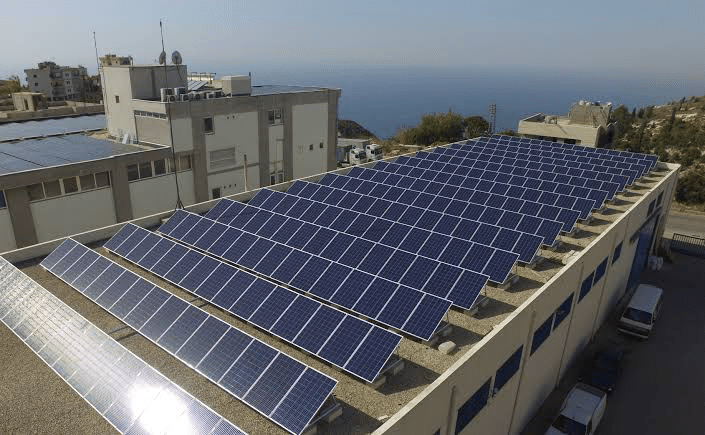






Qatar offered Lebanon the opportunity to establish a 100 megawatts (MW) solar power station, which sparked a debate between the Minister of Economy and the Minister of Energy. The controversy continues with the Lebanese suffering from reduced electricity supply hours from the Électricité du Liban (EDL). The lack of an announced supply hours program deprived people of optimal electricity use, while the delay in issuing Lebanon Electricity bills for about a year increased their suffering.
The Qatari offer was not the first to be hindered by authority forces; nearly a year ago, they ignored a similar offer from Qatar to build three stations, not only one. Moreover, conflicting authority forces impeded the Kuwaiti Arabian Fund’s offer to fund the 2010 electrical plan, Siemens’ offer to establish electrical energy production plants, and the Chinese offer for the same purpose.
The development of the electricity sector faced obstacles and disruptions after the launch of reconstruction projects early in the 1990s. The disruption caused by political discontent among the forces of power transformed the electric energy sector from a strategic facility, with the operational energy it provides for all economic sectors, to a platform for settling political scores and sterile debates between its parties.
Ironically, the development of the electrical sector coincided with the neglect of the maintenance of hydroelectric plants and their development. Noting that these plants provided 70% of Lebanon’s electrical needs until 1976. Moreover, most electrical development projects could not achieve their goals, like the Araman and Zahrani plants, which were equipped to operate on natural gas and were limited to a few months in 2009.
Procrastination in amending Law 462/2002 and the inability to obtain external financing due to the current crisis caused stumbling attempts to produce electricity from wind. This amendment ended EDL’s monopoly on electricity production and gave the Council of Ministers the right to grant licenses temporarily for two years. Licenses were granted to “Sustainable Akkar,” “Wind Energy in Lebanon,” and “Hawa Akkar,” with a total capacity of 200 megawatts, according to Resolution No. 43 dated 11/2/2017.
Moreover, laws that manage the Lebanese energy sector still need to be accomplished. This is the situation of Law 462/2002 (Regulation of the Electricity Sector), Law 48/2017 (Regulation of Public-Private Partnerships), and Law 318/2023 (Distributed Renewable Energy Production Law). This situation was due to the refusal of successive Ministers of Energy to obey the law regulating the electricity sector regarding the formation of the regulatory body, which also must implement the provisions of the Distributed Renewable Energy Production Law that were approved at the end of 2023.
One direct reason for the lack of interest among Lebanese, even those who can afford renewable energy, is the lower price of a kilowatt-hour than its actual cost. Another reason is the need for programs that motivate individuals and institutions to switch to renewable energy despite its sustainability and reasonable cost advantages. In contrast, EDL continued to accumulate debt to purchase fuel and maintain plants without being able to recover only a limited percentage of these costs.
However, the financial and economic crisis that struck Lebanon should have incentivized those in charge of the electricity sector to adopt new approaches addressing the sustainability of the electrical energy supply. In contrast, the Minister of Energy proposed in February 2023 the establishment of three additional plants operating on fossil fuels to produce electrical energy while they could not cover the operating costs of existing plants.
This proposal came after increasing the electricity provided by solar energy stations to 1,500 MW, which made Lebanon need only 1,700 MW. In comparison, the capacity of existing stations is about 2,000 megawatts. Additional licenses to establish 11 solar power stations to begin production within three years with a capacity of 165 megawatts were also granted by a decision of the Council of Ministers on 5/12/2022.
On the other hand, the latest electrical plan faces political and financial obstacles, hindering its execution and development to provide sustainable electricity. Note that this plan addresses only the electricity produced and distributed by EDL plants, without other sources that can integrate to provide a more significant number of electrical hours.
The disruptions and obstacles that hinder the development of the electricity sector require an integrated plan adopted by the government after discussing it with civil society. In this context, the Progressive Socialist Party graciously held a seminar on May 29, in its diamond jubilee, entitled “The Water and Alternative Energy File.” Such seminars allow citizens to be aware of the importance of alternative energy and inform those concerned about all aspects of the energy sector crisis and ways to address it.
This plan must be based on national capabilities, especially river and seawater, wind movement, and sunlight, in addition to the currently operating hydro and thermal plants and private generators. The plan must include producing electrical energy from solid waste treatment, contributing to solving the waste crisis and making electricity.
Lebanon’s financial crisis makes finding suitable investment financing in the energy sector difficult. This scarcity in funding requires activating the public-private partnership law and working to encourage investments in renewable and clean energy.
However, the path to solving the electrical crisis began with establishing good governance and applying the principle of accountability. The officials’ adherence to the legal provisions and working to implement them is the condition for the success of any plan. It is also necessary to achieve security and political stability, which is essential to attract new investments. The steps that must be taken to solve the electricity crisis can be summarized as follows:
– Preventing attacks on transmission and distribution lines and electricity theft and imposing the most severe penalties on those who commit them.
– Maintaining hydroelectric plants, working to develop them, and establishing new hydroelectric plants by adopting modern technologies that do not require high water pressure.
– Motivating municipalities and owners of private generators to contribute to establishing solar energy stations to produce electricity.
– Reconsidering the price of a kilowatt produced from solar energy, purchases by the Electricité du Liban from individual producers to motivate them to produce the largest amount of electricity.
– Treating existing landfills to benefit from methane emissions in generating electricity, like the Naameh landfill, prevents these landfills’ explosion and reduces environmental risks.
– Establishing solid waste treatment plants using technologies that simultaneously allow electrical energy production and waste disposal.
– Providing guarantees and facilities for producers of wind energy projects to help diversify electricity sources and sustain supply.
– Providing natural gas to operate the Arman and Al-Zahrani plants reduces the cost of production and the burden on citizens.
– Accelerating the issuance of EDL bills, allowing consumers to monitor and rationalize their consumption.
Stabilizing the situation of public services, including ensuring the sustainability of the electrical energy supply, requires ending the treatment of those in charge of these services as sectarian or political fiefdoms. These services are a citizen’s right over his state, and everyone in charge of public affairs must try to provide them in the best way, at the lowest cost, and at the appropriate time.
The financial and economic crisis that every Lebanese is suffering from its repercussions should not prevent us, especially public sector employees, from working hard to restore public administrations and institutions to their activities and develop them to keep pace with the spirit of the era that preceded them before being too late, and when regret is of no use.