Reading in English | Read in العربية (Arabic)
The war waged by the United States and Israel against Iran has entered its third consecutive week, raising fears of escalating conflict that could evolve into an open regional dispute with repercussions extending beyond the directly involved parties.
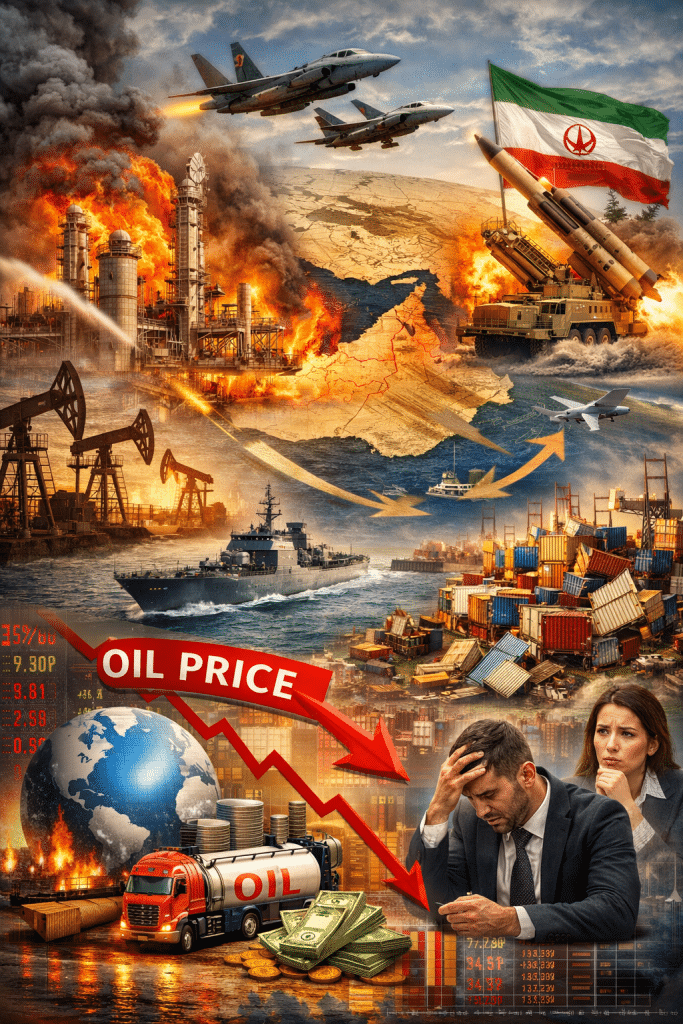
The seriousness of this escalation is heightened by the nature of Iran’s response, which has increasingly targeted vital facilities in Gulf countries, particularly airports and logistical installations. This has resulted in noticeable disruptions in air and maritime navigation, leading to growing imbalances in regional transportation networks and supply chains, with broader economic and security consequences worldwide.
**From Objectives to Consequences**
Currently, there are rising concerns that the targeting could expand to include more sensitive facilities, most notably water desalination plants and oil and gas installations, which are crucial to the economies of Gulf countries and are a primary source of global energy supplies. Any damage inflicted on these facilities would not only affect the directly involved nations but would also have direct repercussions on global energy markets, given the pivotal role the Gulf region plays in supplying the world with oil and gas.
The United States and Israel were expected to consider the consequences of this war before engaging in it. In addition to setting clear war objectives, it is essential to assess the risks and repercussions for those involved, neighboring countries, and indeed the entire world. This prompts an exploration of the underlying reasons for launching this war, which threatens global stability and warns of an impending economic crisis that many countries may not be able to bear.
**Immediate Causes of the War and Its Objectives**
It goes without saying that the immediate causes of the US-Israeli war against Iran stem from viewing its nuclear program as a threat to global peace, as well as its ballistic and hypersonic missile programs that threaten the region, particularly Israel. Additionally, there is concern over Iran’s growing military maritime capabilities and its regional alliances, including networks of proxies that pose a direct threat to Israel and challenge US interests in the area.
However, this war is not limited to curtailing Iran’s nuclear ambitions or reducing uranium enrichment; it extends to undermining Iran’s ability to expand its regional influence and utilize its power beyond its borders. It also aims to prevent any threat Iran may pose to maritime security, especially through the Strait of Hormuz.
**Iran’s Cooperation with Russia and China**
It is important to note that efforts to constrain Iran’s regional role are not isolated from the international context of the struggle to reshape the global order and its balances. Despite the sanctions and isolation imposed by the US and Western nations on Tehran, Iran is not geopolitically isolated. In recent years, Iran has successfully strengthened its strategic cooperation with Russia and deepened partnerships with China, particularly through a long-term cooperation agreement signed in 2021.
This dynamic has positioned Iran as part of the forces seeking to reduce Western dominance over global decision-making centers and energy and trade corridors. In light of the “asymmetrical” war it faces, Tehran is leveraging its geopolitical advantages, notably its control over the Strait of Hormuz, along with its missile capabilities, to shift the confrontation from a traditional military scope to an economic dimension, impacting global energy flows and, consequently, the international economy.
**Focus on China**
While the US-Israeli strikes target Iran’s military and economic capabilities, it is evident that the strategic focus of the United States is largely directed toward China. The confrontation with Iran is part of a broader challenge aiming to curb the pace of China’s economic rise and reassert Washington’s influence within the fabric of the international system.
From this perspective, this war seeks to disrupt Iranian oil exports to China, Washington’s strategic adversary, particularly since these exports occur through preferential pricing mechanisms that provide Chinese industries with significant competitive advantages. This leads to reduced production costs, maintained low inflation rates, and enhanced adaptability for China during periods of global economic downturn. Thus, these policies are part of a broader strategy to stifle Chinese economic growth and limit its expansion within the international economic framework.
**Consequences That Affect Everyone**
The threats posed by Iran to maritime security in the Strait of Hormuz, coupled with its targeting of vital facilities in Gulf countries and the damage to its own infrastructure due to military attacks, collectively contribute to escalating regional tensions, accompanied by a notable increase in shipping and insurance costs. This, in turn, raises the cost of energy supplies, particularly oil and gas, for importing countries from Europe to China, prompting them to seek alternative sourcing solutions.
However, these alternatives cannot be secured immediately, and in an environment characterized by high risks, alternative sources may lack the same advantages in terms of cost, sustainability, or reliability. The need for these alternatives is not limited to China; it extends to a wide array of countries, especially considering that 20% of global energy supplies pass through the Strait of Hormuz, underscoring the severity of threats to maritime security in that region and its implications for global energy security and economic ramifications.
**Conclusion**
The repercussions of the US-Israeli war on Iran indicate that its economic consequences extend beyond the targeted parties and the geographic framework of the conflict. They do not solely affect Iran or its economic partners, especially China, but also expand to impact the global economy as a whole. Disruptions in energy supplies through the Strait of Hormuz, rising shipping and insurance costs, and supply chain imbalances all contribute to increasing inflationary pressures and a slowdown in global economic growth.
Thus, this war is transforming from a limited regional confrontation into a crisis of international dimensions, reshaping the contours of global markets and imposing escalating economic burdens on various nations—whether they are importers or exporters—that many economies may struggle to absorb in the medium to long term.