
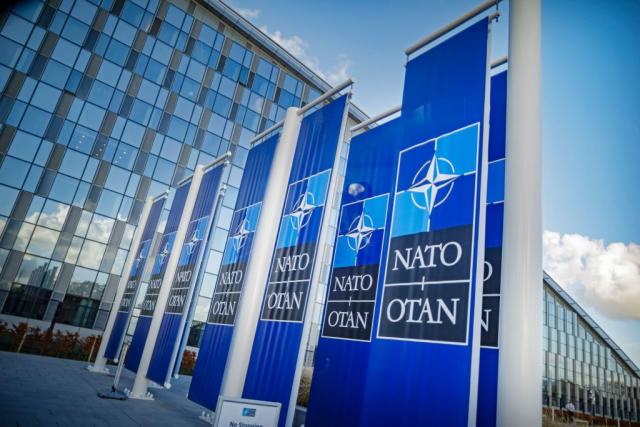






NATO’s defense ministers are set to meet in Brussels next week to initiate a significant rethinking of the alliance’s long-standing strategy toward Russia, according to a recent report from Politico. The meeting marks a pivotal moment in NATO’s response to the changing geopolitical landscape, particularly following the deterioration of relations with Moscow in the wake of the Ukraine conflict. Despite the deep freeze in ties, the 1997 NATO-Russia Founding Act, which sought to foster a stable and peaceful Europe, remains in place, though its relevance to the current context is increasingly questioned.
The NATO-Russia Founding Act, signed in 1997, was intended to formalize cooperation between the Western military alliance and Moscow, under the shared aspiration of building a “stable, peaceful, and undivided Europe.” At the time, Russia was emerging from the collapse of the Soviet Union, and NATO was gradually expanding eastward, but there was still hope that the two could coexist peacefully. However, the deteriorating situation in Ukraine and NATO’s significant eastward expansion have placed that vision in jeopardy.
In recent years, particularly after Russia’s 2014 annexation of Crimea and the ongoing Ukraine conflict that began in 2022, NATO has viewed Moscow not as a partner but as a threat. At its July 2023 summit in Washington, NATO officially declared Russia to be the “most significant and direct threat to Allies’ security.” This statement marked a dramatic departure from the spirit of cooperation outlined in the Founding Act.
Despite this, the Founding Act has not been formally annulled. It remains an official document within NATO’s policy framework, though many within the alliance now see it as outdated. According to Politico, NATO’s upcoming discussions will center on how to modernize the bloc’s stance toward Russia, with some members questioning whether it is time to abandon the 1997 document altogether.
A senior US official, quoted in Politico, emphasized the need for a new strategy. “It is time to now craft a new strategy in terms of specific positions of the member states,” the official said, pointing to the need for NATO to adapt to the changing security environment. Discussions on the matter have been underway for months, but next week’s ministerial meeting in Brussels will bring the debate to a higher level. The alliance aims to have a new strategy formulated before its summit in The Hague next summer.
The shift in NATO’s approach is described as a “political exercise” by the US official, who indicated that the military implications would likely be limited. However, this rethinking of NATO’s Russia policy could still have significant geopolitical consequences, particularly as the bloc continues to strengthen its eastern flank in response to Russian aggression in Ukraine.
The debate within NATO reflects deep divisions among member states. While most agree that the Founding Act is no longer relevant to the current situation, there is less consensus on what should replace it. Some members, particularly those in Eastern Europe, advocate for a tough stance against Russia, fearing further aggression. Others, including Hungary and Slovakia, still see value in maintaining a level of engagement with Moscow, worried that an overly aggressive strategy could destabilize the region.
NATO’s challenge is to find a balance between deterring Russian aggression and avoiding actions that could provoke further escalation. For many members, particularly those on Russia’s borders, the priority is bolstering defense capabilities and ensuring that NATO is ready to respond to any potential threat from Moscow. This has already led to increased military spending and deployments along the alliance’s eastern frontier, with countries like Poland and the Baltic states playing a key role in hosting NATO forces.
However, some members are more cautious. There is concern that a heavy-handed approach could backfire, potentially pushing Russia into a corner and making diplomacy more difficult. Hungary and Slovakia, for example, have taken a more conciliatory stance toward Moscow, advocating for dialogue even as the broader alliance moves toward a more confrontational posture.
This internal debate is likely to shape the outcome of NATO’s strategy review. While there is broad agreement that the Founding Act no longer reflects the current reality, the specifics of what will replace it remain unclear. Some members may push for a complete break with the past, while others may seek to preserve elements of engagement with Russia, hoping to keep diplomatic channels open.
From Moscow’s perspective, NATO’s shift toward confrontation is deeply troubling. Russian officials, including Deputy Foreign Minister Aleksandr Grushko, have accused the alliance of preparing for war with Russia. Grushko recently stated that NATO is “bracing for a potential military conflict with Moscow,” pointing to the bloc’s increased military budgets and what he described as the militarization of Western economies.
According to Grushko, NATO bears full responsibility for the current crisis in European security, arguing that the alliance’s refusal to engage in dialogue has led to the Ukraine conflict and the broader deterioration of relations. Moscow views NATO’s eastward expansion, particularly the inclusion of countries like Ukraine and Georgia as potential members, as an existential threat. This has been a long-standing concern for Russia, which sees NATO’s presence on its borders as a violation of the security guarantees implicit in the Founding Act.
As NATO defense ministers meet in Brussels, the alliance faces a difficult task. It must develop a strategy that both deters Russian aggression and avoids escalating tensions further. The question of how to replace the NATO-Russia Founding Act is central to this process. The document, once a symbol of hope for a peaceful Europe, now serves as a reminder of a time when NATO and Russia sought cooperation rather than confrontation.
The stakes are high. NATO’s ability to navigate its internal divisions and present a united front will be critical to its success in crafting a new Russia strategy. Meanwhile, Russia’s perception of NATO as a threat continues to shape its actions in Ukraine and beyond, ensuring that the geopolitical landscape remains fraught with tension.
As the alliance prepares for its next summit in The Hague, the world will be watching to see how NATO adapts to a new era of relations with Moscow, one that is likely to be defined more by competition than by cooperation.
The post NATO defense ministers rethink strategy towards Russia appeared first on BLiTZ.
